The Stablecoin Interoperability Problem

Kuma from KIRAPAY
Key Insights
Stablecoins are already moving trillions of dollars each year in real economic activity. Major stablecoins like USDT and USDC exist on many blockchains at once.
This “one coin, many chains” model creates fragmentation and failed payments.
Bridges help move value, but introduce cost, delay, and security risk. Without chain abstraction, stablecoins behave like isolated banking systems, not global money.
Solving interoperability is the key to unlocking everyday stablecoin payments at scale.
Introduction: Stablecoins Are Working — But the Infrastructure Isn’t There Yet
Stablecoins were created to solve a simple problem: how to move money digitally without volatility.
They are pegged to fiat currencies like the US dollar and are now used for:
Payments
Remittances
Trading
DeFi
Treasury management
Today, stablecoins settle over $11 trillion annually, rivaling traditional payment networks. This makes them less of a crypto experiment and more of financial infrastructure. But as adoption grows, a deeper issue is becoming impossible to ignore.
One Coin, Many Chains
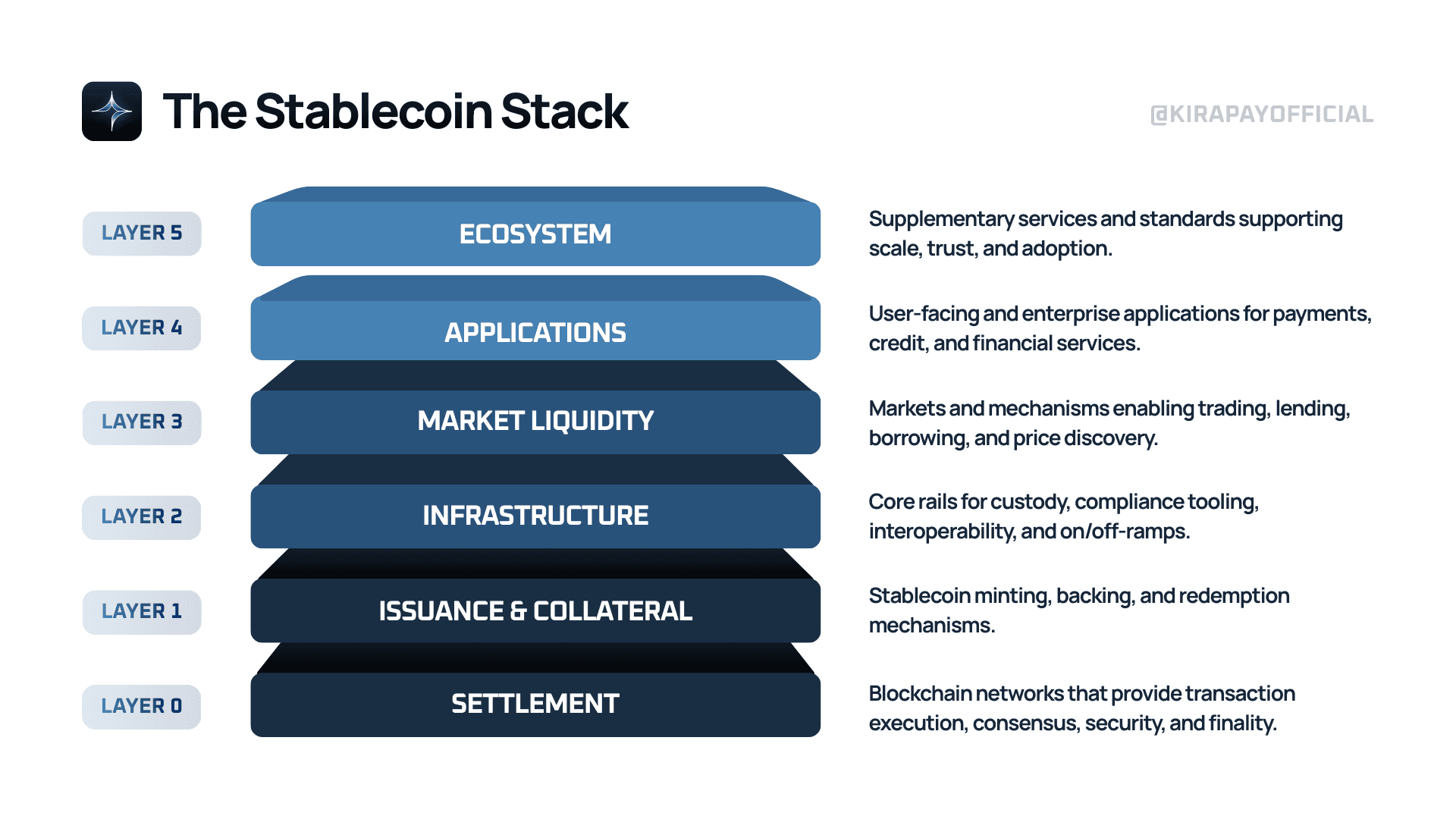
To reach more users and reduce dependency on a single network, stablecoin issuers deploy their tokens across multiple blockchains.
For example:
A bridged USDT on Base is a wrapped version of USDT, not a stablecoin natively issued by Tether. It is created when USDT from another blockchain (most commonly Ethereum) is locked in a bridge, and a wrapped or mirrored token is minted on the Base network to represent that USDT.
While it functions like USDT for users — enabling faster and cheaper transactions on Base — it is a separate asset with a different contract, not directly redeemable with Tether, and its value depends on the security of the bridge holding the original USDT.
The Interoperability Problem Explained
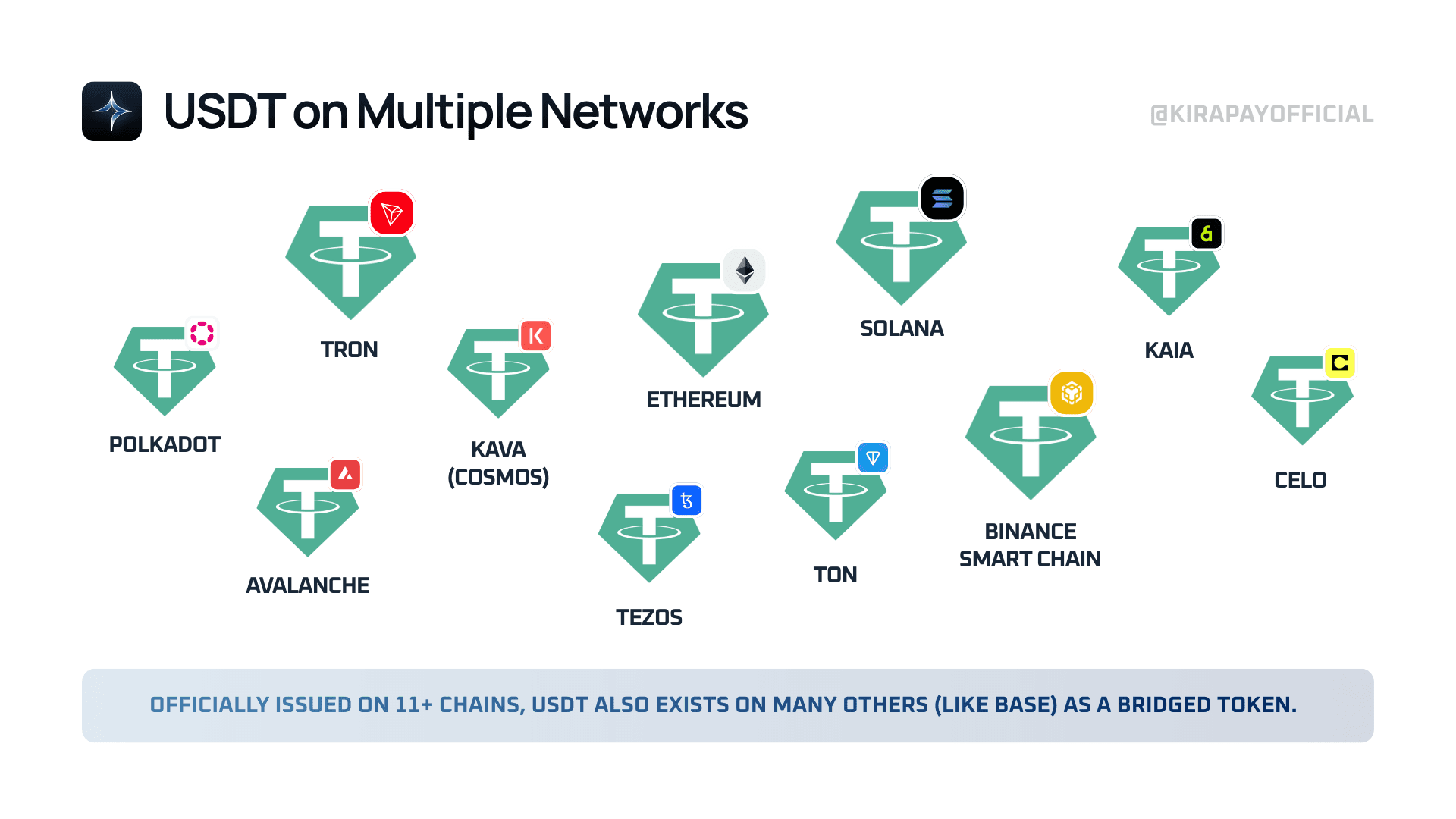
Blockchain networks do not natively talk to each other.
So when the same stablecoin exists on different chains, value becomes trapped in liquidity silos.
To move funds between chains, users rely on:
Bridges
Wrapped tokens
Burn-and-mint mechanisms
This creates four major issues.
1. Fragmented Liquidity
USDT on Ethereum is not the same as USDT on Tron.
Liquidity becomes uneven:
Some chains are deep and liquid
Others are thin and isolated
This reduces efficiency and makes real-time payments harder.
2. Bridge Risk
Bridges are one of the most exploited components in crypto.
Over $2 billion has been lost to bridge hacks, with high-profile incidents proving that:
Extra validators
Oracles
Wrapped assets
All increase attack surface.
For payments, this risk is unacceptable.
3. High Costs and Delays
Cross-chain transfers often involve:
Gas fees on multiple networks
Waiting minutes or hours
Extra steps just to complete a payment
That might be acceptable for traders —
but not for checkout or remittances.
4. Compliance and UX Friction
Different chains often mean:
Repeated KYC
Different wallet behavior
Confusing error states
Instead of a global economy, stablecoins behave like disconnected banking systems.
Why This Limits Real-World Payments
Despite massive settlement volume, most stablecoin usage still happens inside silos.
Examples:
Payments fail when users hold tokens on the “wrong” chain
Remittances cost 1–5% due to routing and bridging
DeFi liquidity is split across ecosystems
Stablecoins should flow like email. Instead, they behave like money locked in separate countries.
The Shift: From Interoperability as a Problem to an Opportunity
The industry is moving toward a new idea:
Users shouldn’t move assets across chains. Infrastructure should handle it for them.
We’re seeing progress through:
Native multi-chain issuance
Messaging standards
Aggregation layers
Chain abstraction approaches
The goal is not more bridges. The goal is fewer decisions for users and merchants.
Where KIRAPAY Fits In
At KIRAPAY, we approach interoperability from a payments-first perspective.
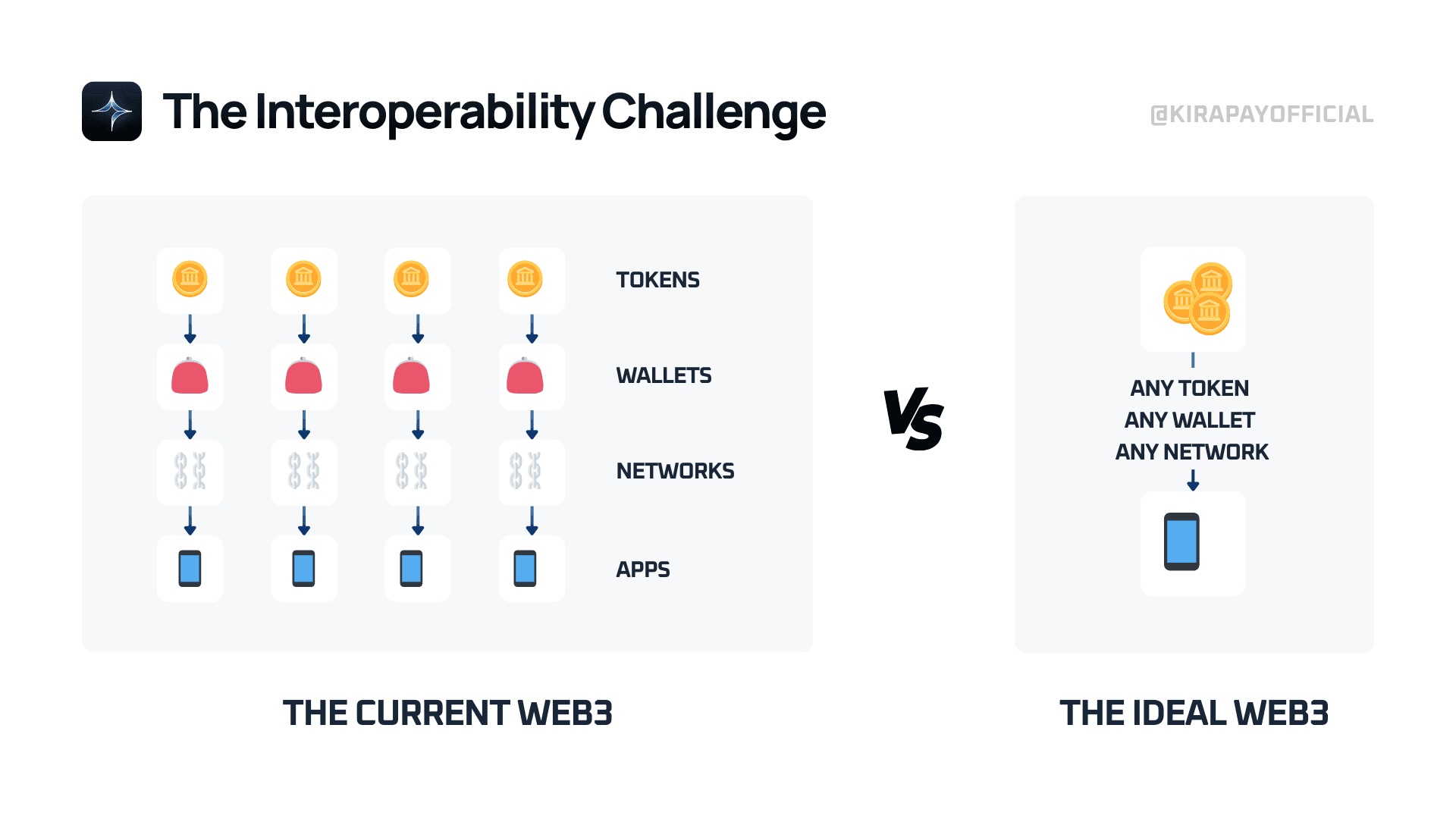
Instead of asking users or merchants to manage chains, gas, or routing:
Users pay with any token, on any supported chain
KIRAPAY handles routing and execution behind the scenes
Merchants receive instant, predictable settlement on their preferred network
No bridges for users.
No retries.
No “wrong chain” failures.
That’s what chain-agnostic payments should look like in practice.
The Road Ahead
Stablecoin interoperability is no longer a niche technical issue.
It’s the difference between:
Stablecoins as trading tools
Stablecoins as everyday money
As more chains launch and more users come online, the winning systems will be those that:
Prioritize security
Reduce complexity
Respect user ownership
Abstract infrastructure from experience
Solve interoperability, and stablecoins become the internet of value.
Final Thought
Stablecoins already move trillions. The demand already exists. What’s missing is infrastructure that lets value flow freely across chains, borders, and use cases. One coin should feel like one coin. Everything else should be invisible.